
Klemm L-25 d
The history of this successful training and sports aircraft begins as early as 1919, when Hans Klemm, later referred to as the "father of German sports aircraft", created the L-15 aircraft, powered by a 9.2 kW Harley Davidson motorcycle engine. He was followed by the L-types -18, L-20 and in 1925 even the light twin-engine L-21, designed specifically for the race around Germany.In 1928 Klemm modified the successful L-20 type, still flying with the 13.9 kW Mercedes F-7502 engine , for a Mercedes engine with a power of 29.4 kW; after modification of the airframe, a new type was created, designated L-25, intended not only for school and sports use, but also for practicing acrobatics.
It was the versatility of use, given also the possibility of installing an engine with a power of up to 73.6 kW, that enabled an unprecedented large-scale series production that had not been seen in a sports aircraft until then. From 1928 to 1939, a total of 600 pieces of various modifications were produced. They differed mainly in the engines used; in addition to those already mentioned, Salmson AD-9 engines with a power of 33.12 kW, Siemens Sk-13 (64.77 kW), Blackburn Cirrus, AS Genet (64.77 kW), Argus AS-8 (73.6 kW) were installed , BMW Xa (44.16 kW) de Havilland Gipsy, Poorboy (55.2 kW), Hirth Hm-60 (52.99 kW) and until the last pieces the Hirth HM-60 R (58.88 kW), already determined for the next type in the Klemm series of aircraft — the L-35. The "twenties" with this engine were marked "d".
Klemm L-25 aircraft in all modifications were also operated with floats (then designated WL-25) or with skis. Klemm L-25 airplanes were used for several remarkable sporting feats: in 1929, the German long-distance record of 1,705 km was set, and in 1930, the famous glider engineer Wolf Hirth made a 24,000 km long flight from Berlin via Iceland and Canada to the USA. In the 1930s, Klemm L-25 aircraft participated in all air races in Germany, for example the L-25d described below with the license plate D-ENEX successfully took off in the Deutschlandflug 1935 race.
Klemm L-25 aircraft were exported to a number of European countries, several of them still flew (with original engines!) in the NSR, Luxembourg and Switzerland at the end of the seventies.
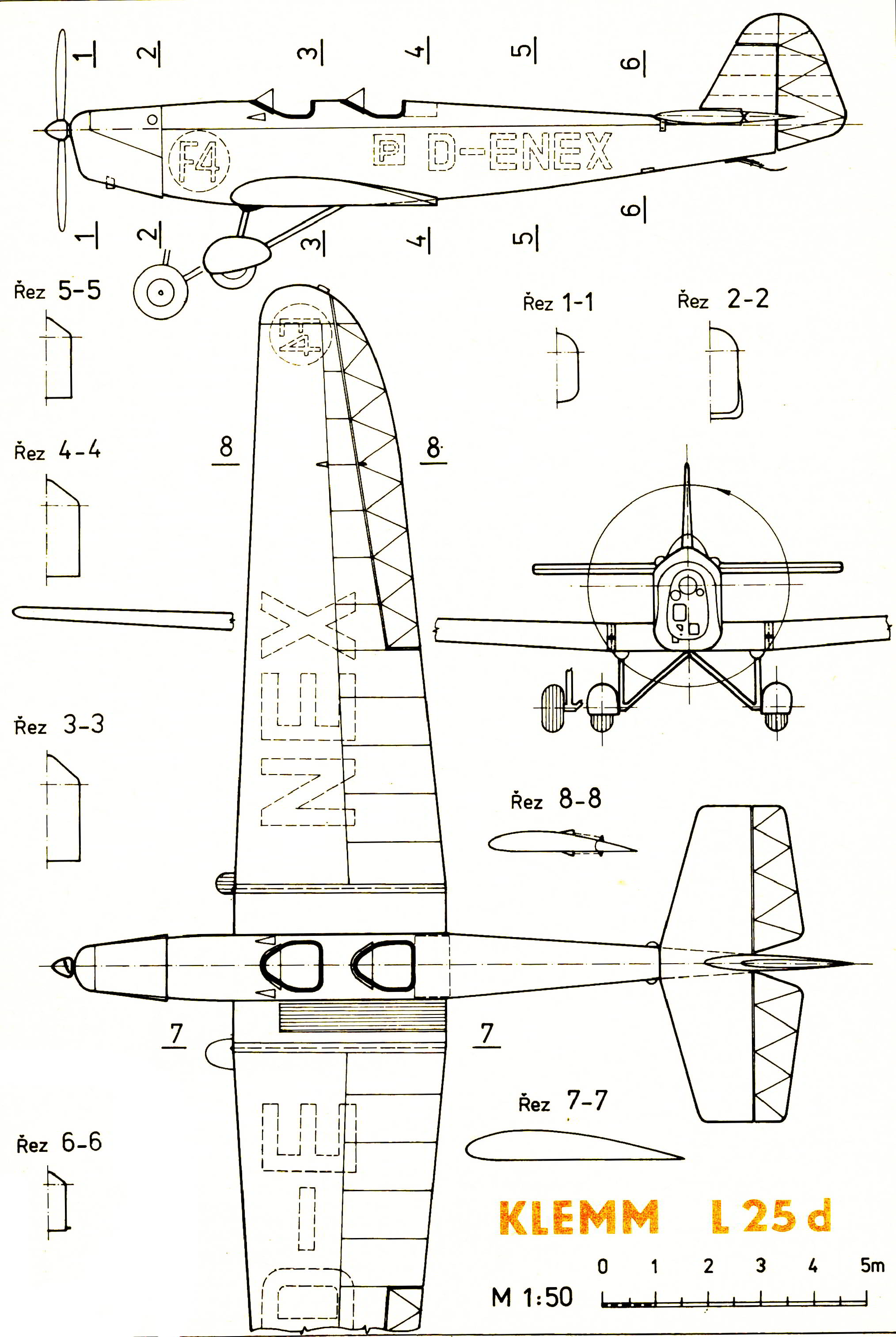
TECHNICAL DESCRIPTION
The Klemm L-25d was a two-seater single-engine low-wing aircraft with a fixed undercarriage and a fixed spur, used for training, sport flying, aerobatics and towing gliders.
The wing of the all-wood construction had one beam, forming a massive torsion box with a rigid covering of the leading part. The outer parts of the wing could be separated in the center plane, so the plane could be transported along its axis behind a passenger car. The wings were also wooden, with diagonal ribs. The parts glued with plywood were not covered with canvas (applies to the whole aircraft). The gap between the outer parts of the wing and the centerplane was covered on both sides with a strip of aluminum sheet.
The hull of a rectangular section with a round upper part was also made entirely of wood, glued with plywood. The interior was cross-reinforced with steel wires. The open cockpits were lined with leather and fitted with transparent wind shields. The front cockpit was equipped with two rear-view mirrors. The instrumentation varied quite a bit. The control of the classic arrangement (with cables and pulleys) was doubled. Behind the rear cockpit was a luggage compartment, accessible through a duralumin door. The sheet metal engine cover was removable.
The tail surfaces of the self-supporting wooden structure had the stabilizer and keel glued with plywood and the rudders covered with canvas. With a horizontal tail surface, it was possible to change the angle of attack on the ground.
The landing gear was of the classic spur type. The aircraft of the first series were equipped with high-pressure tires, from 1935 (approximately) then with low-pressure (balloon) tires. The chassis was sprung with a three-point suspension in rubber blocks. After the end of II. During the Second World War, aerodynamic main landing gear wheel covers appeared on some surviving aircraft. The spur was originally solid, sprung with leaf springs and with a shoe, in the preserved pieces it was replaced in several cases by a steerable spur wheel.
Engine group. Hirth HM-60 52.99 kW or Hirth HM-60 R 58.88 kW air-cooled in-line engine, equipped with a fixed wooden two-bladed propeller. The fuel tank with a volume of 64 liters was located behind the engine compartment. Some aircraft were equipped with Hirth engines modified for flying on their backs.
The coloring was quite different. Most aircraft in the early 1930s were impregnated with clear varnish (celon) so that they were the color of birch plywood and canvas. The aircraft, registration D-ENEX, had black markings on both sides of the fuselage and wings. The black F4 marking was on a white, black-lined background, as was the letter P. The engine cowling, the upper round section of the fuselage to the forward cockpit, the luggage compartment cover, the landing gear and the wing joint cover were silver. The stripes on the vertical tail surface were (top) black, white and red.
By the late 1930s, the planes were all silver with black license plates. However, the photos of this modification have not been preserved, they are only mentioned in the technical descriptions of the races.
The Hungarian Klemm L-25d with registration number HA-OBN had a deep red fuselage with creamy white trim and white registration-lacl on both sides of the fuselage. The airfoils were white with matriculations in the color of the fuselage — on one half of the wing were the letters HA—, on the other OBN.
In the 1970s, refurbished aircraft were already more brightly colored. The aircraft, registration D-EJOL, was all ivory with a red tapering stripe on the fuselage (starting just behind the engine cowling). The turn signal and engine cover were also red, but they had a lighter shade. On the keel was the NSR flag, on the hull below the stripe on both sides black matriculation.
The LX-МАР aircraft had a red fuselage, SOP and leading edge of the wing, a stripe on the fuselage, an arrow on the SOP and registration white, and a green wing and VOP. On the SOP there was an emblem consisting of three white wings on a blue background.
Technical data and performances. Span 13.00 m, length 7.43 m, height 2.0 m, wing area 20.0 m2, empty weight 420 kg, flying 680 kg. Top speed in horizontal flight 150 km/h, cruising 130 km/h, landing 70 km/h (with Hirth HM-60 engine). Ascent to 1000 m 7.8 min, reach 3500 m, range 720 km.
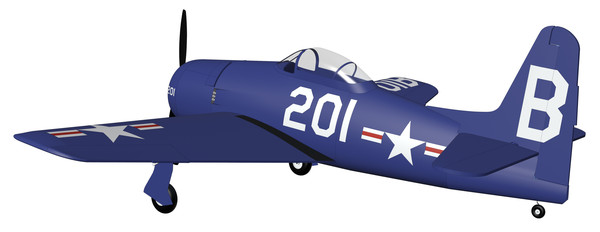 Grumman F8F Bearcat
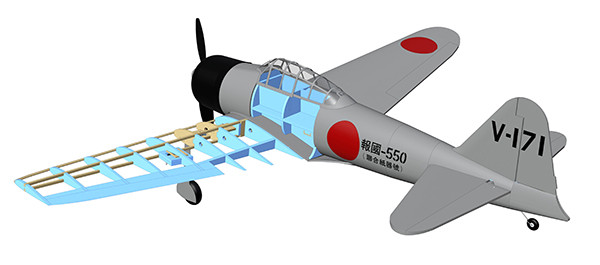 Mitsubishi A6M Zero
 Focke-Wulf Fw 190A
 Cessna 172 Skyhawk
 Aeronca 7AC Champion
 7ECA Citabria
 Yak-55M
 Piper PA-28 Cherokee
 Lanarius RC glider
 Extra-300
 Piper PA-18 Super Cub
 Sbach 300
 T-28 Trojan
 Messerschmitt Bf-109
 Nakajima Ki-84 Hayate
 Republic P-47N Thunderbolt
 Edge-540
 Cessna 150
 F4U Corsair (Fatty+Normal)
 Grumman F6F Hellcat
 Lavochkin La-7
 Airbus A320
 Curtiss P-36 Hawk

Cartoon Messerschmitt Bf. 109
Cartoon Piper Cub
Lake Clipper Supermarine Spitfire
 Hawker Hurricane
 Curtiss P-40 Warhawk
 North American P-51B Mustang
 2000 mm RC motor glider
 Piper J-3 Cub
 Cessna
 American Champion Decathlon/Citabria
 Extra 330SC
 Flying Wing
 Grumman Goose/Albatross
 MiG-29 Fulcrum
 Slow Flyer
 Hydro Slow Flyer
 RC airboat
 Flying Boat
 Space Shuttle
 PZL-104 Wilga 2000 Draco
 Beechcraft 17R Staggerwing