
Aeronca 7AC Champion RC plane
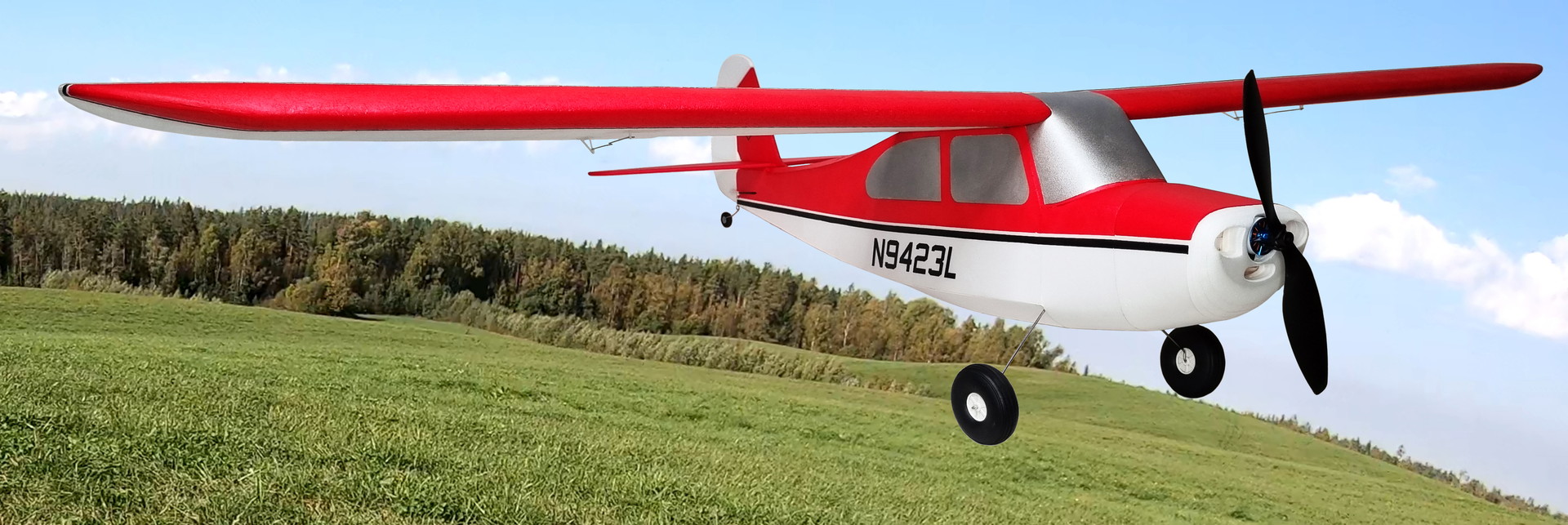

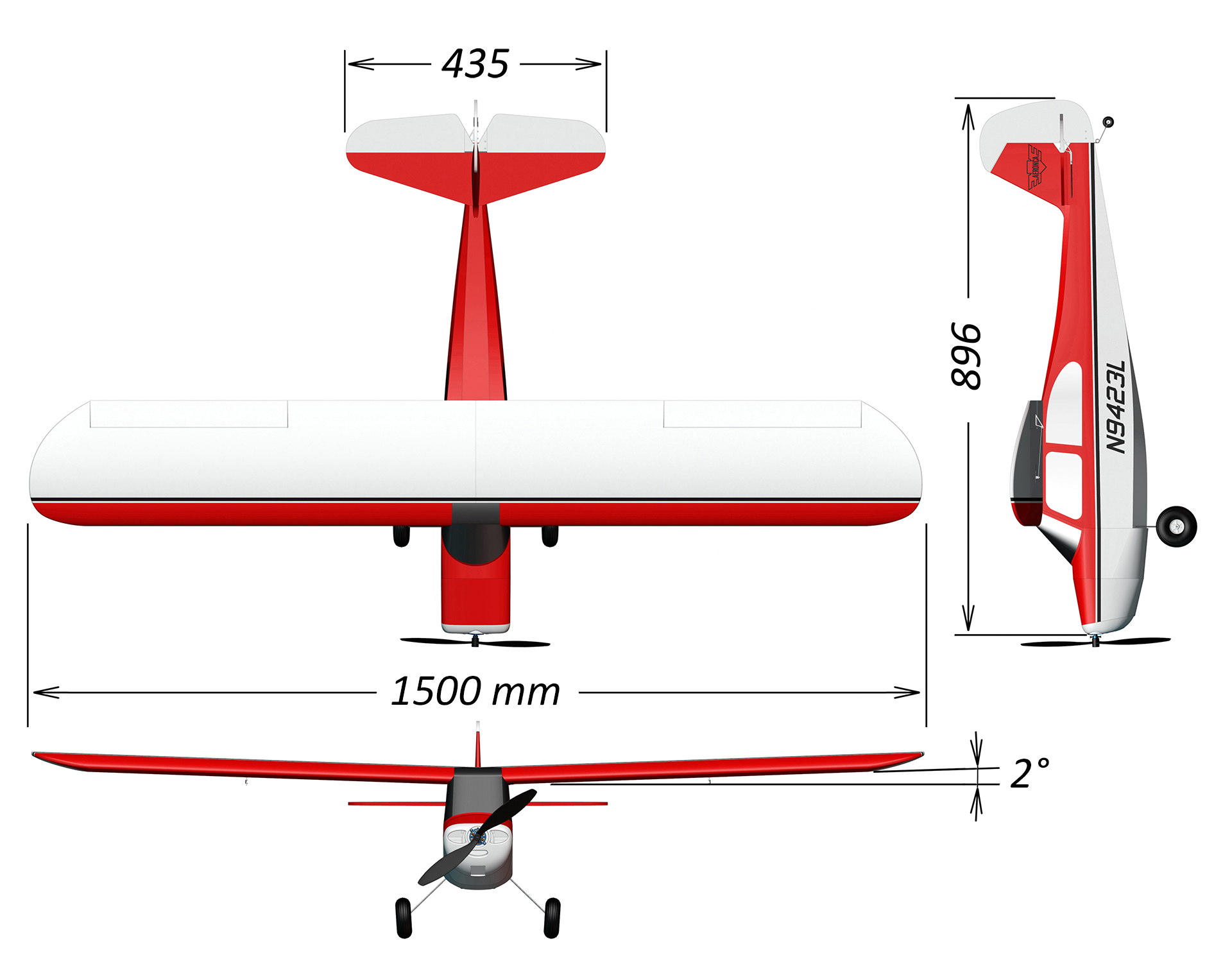
Wingspan: 1,500m (59")
Wing area: 30,48 dm2
Flying Weight: 372g (13.1 oz) (with 380 mAh battery if the foam density is 28kg/m3 )
Wing loading: 12,2 g/dm2
Flight time: 1 min ≈ 19mAh (slow flight in calm)
Materials: 5mm XPS extruded polystyrene foam (Depron, Styrofoam etc.), except wing skin (3mm XPS), PLA-LW for "plywood" parts.
Total volume of all 5mm foam parts: 3,37464 dm3, wing skin area with ailerons is 63,3627 dm2. So if you use foam with a density 40kg/m3, you get an increase in weight approx. 64 grams.
Motor: SunnySky X2305 KV1450 (25g),
ESC: SunnySky X 18A (9g),
Propeller: 1047
Servos:EMAX ES9052MD (5,5g) x 4
Carbon wing tube: 8x7x500mm
Carbon control rods: 500x2x1mm
Carbon Strips: 0.5mm x 3mm
LiHV battery: 850mAh 2S 7.6V (36g); 650 mAh 2S 7.6V (34g)
Male/ Female Servo Connectors
Wheels 70mm (2.75")11x2g or 64mm (2.5") 9x2g
Stainless Steel Spring Wire 2 mm
Plastic screws M3x25mm
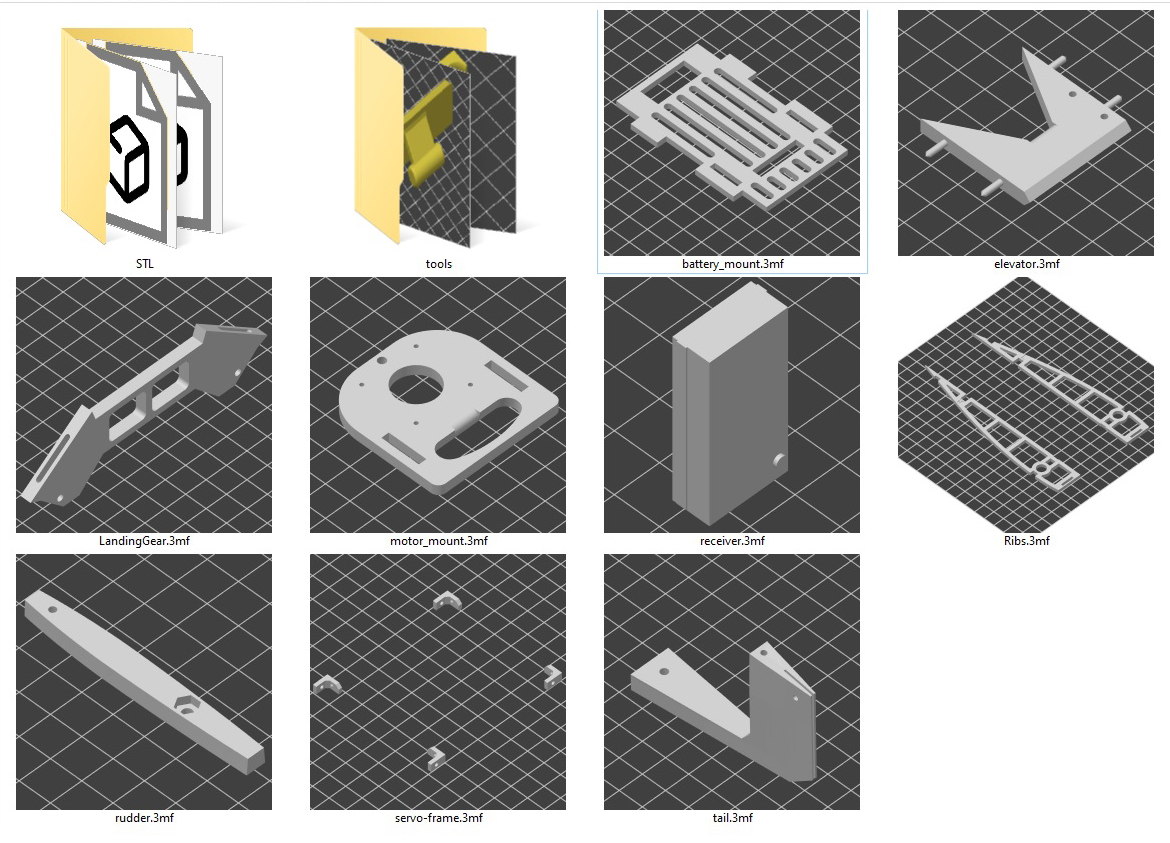
STL, 3MF files for 3D printed parts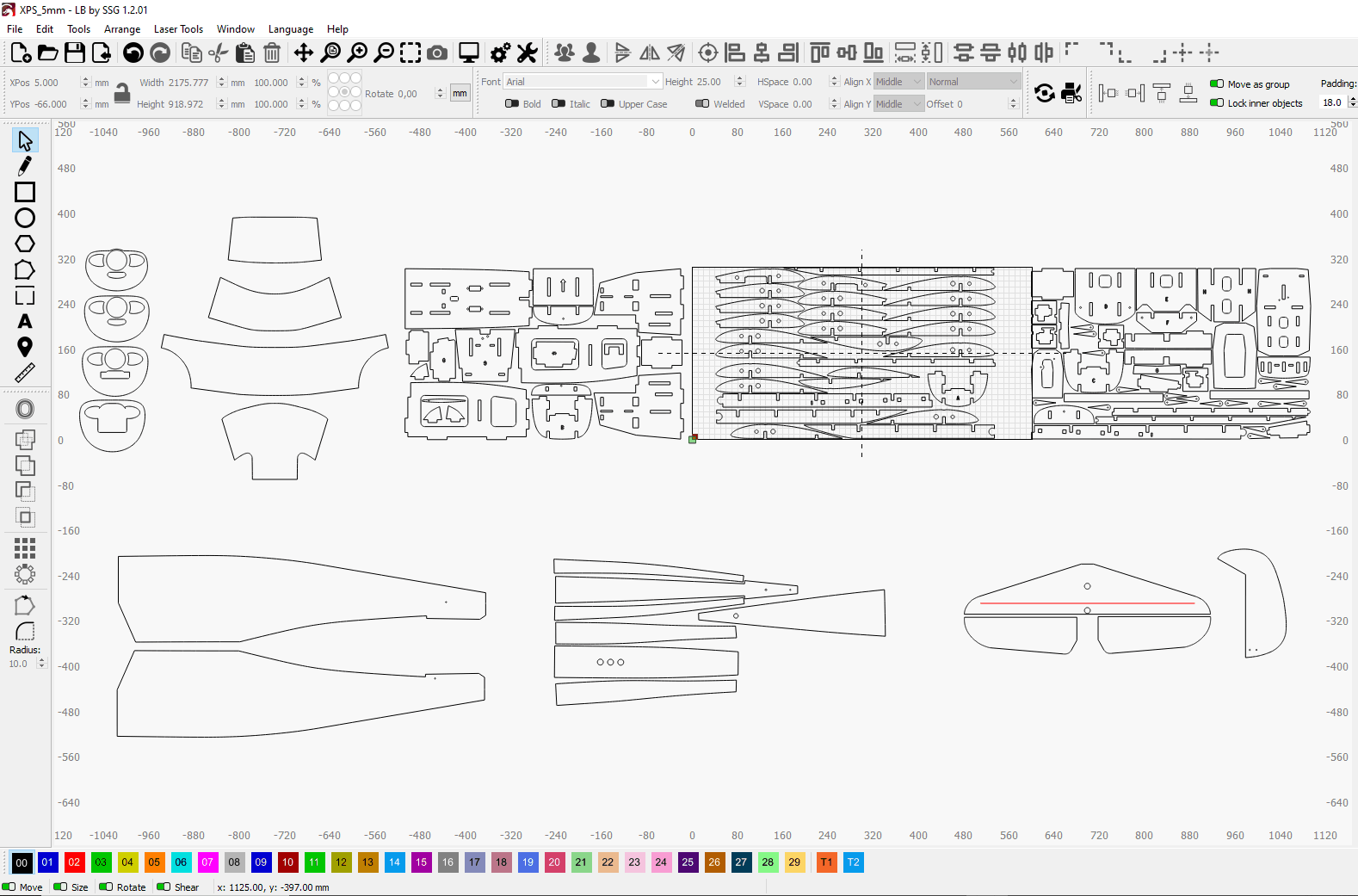
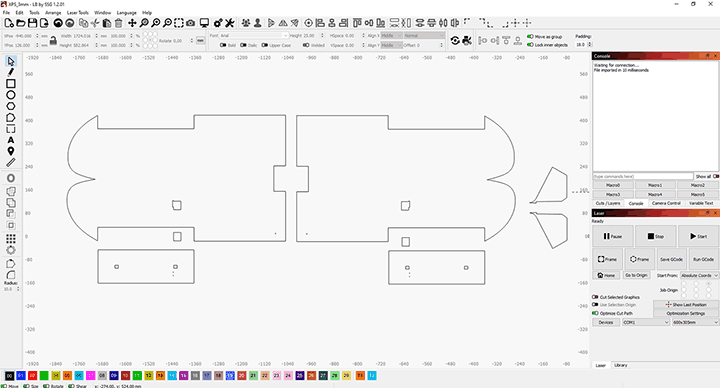
DXF laser cut files
To automatically arrange parts on your working area, use automatic nesting software.
If you don't have a laser cutter or your diode laser doesn't cut white or blue polystyrene foam, you can cut the foam details by hand with a knife using printed paper templates (A3 paper size PDF is included).
Download PDF, STL, 3MF and DXF files (€7) в pубляx
Download free example
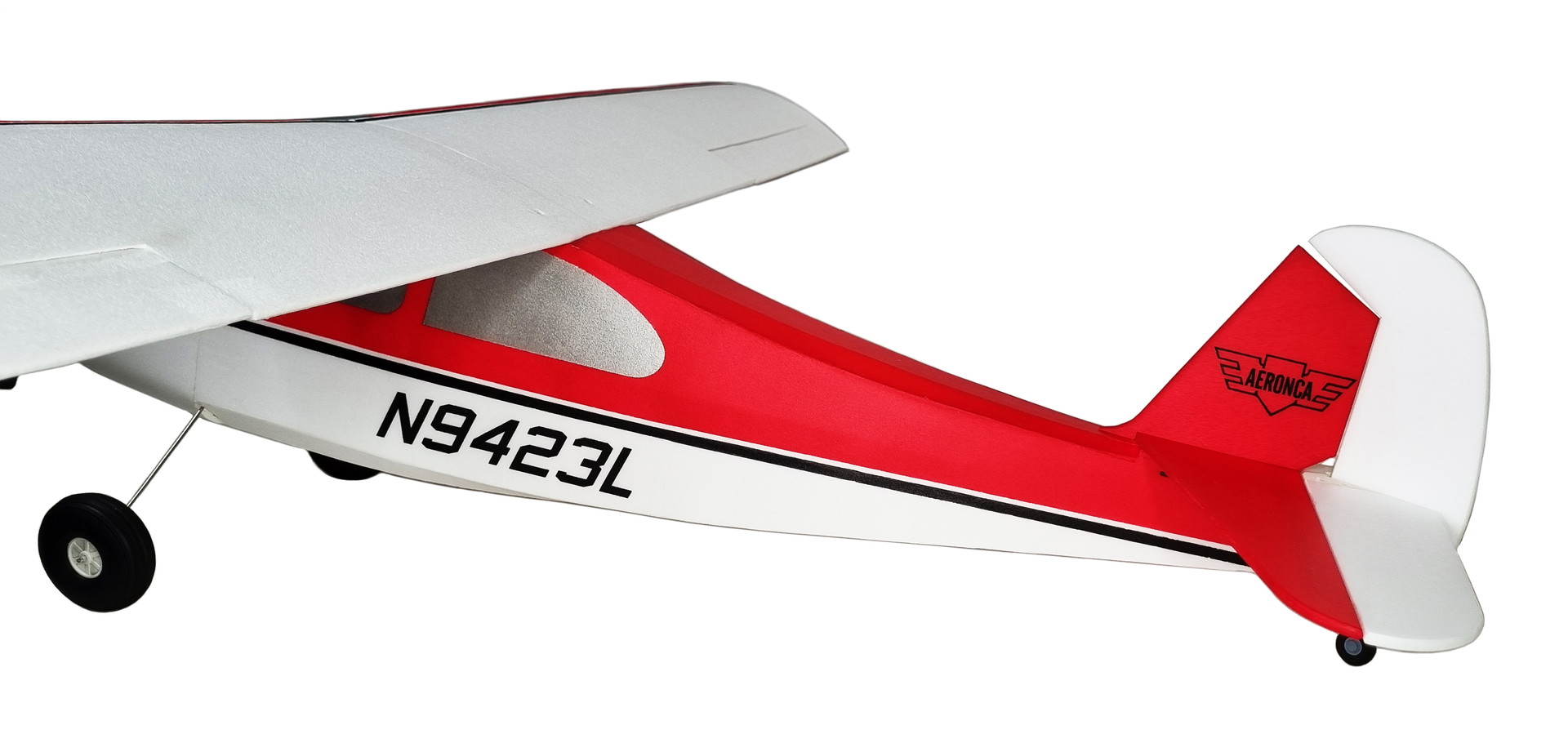 removable wings, tail and landing gear
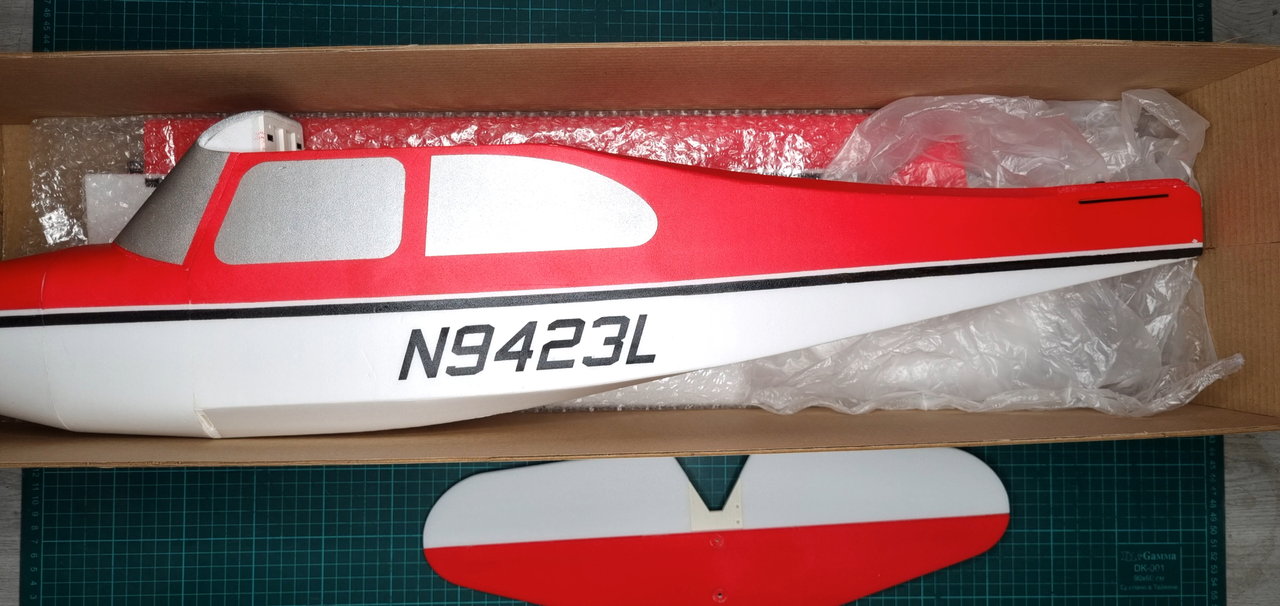
Cardboard box dimensions: 870x230x200mm
Aeronca Aircraft Corporation was founded in 1928 in Cincinnati, Ohio, with the support of future Senator Robert Taft. By 1951, when the company ceased aircraft production, it had sold over 17,000 units of various models.
The Series 7 model, dubbed the "Champion," was developed during the war based on the pre-war Aeronca K Scout, which debuted in 1937. Another prototype was Piper Aircraft's highly successful Piper J-3 Cub, which began sales in 1938.
The company was simultaneously working on two aircraft—the Series 7 and the Series 11, dubbed the "Chief." Engineer Raymond Hermes led the project. The aircraft were very similar in appearance; the biggest difference was the pilot and passenger seating arrangement. The Series 7 featured tandem seating, one behind the other. Moreover, the shortcomings of its main competitor, the Piper, were also taken into account. The Piper placed the passenger in front of the pilot, obscuring his view, while the Champion's pilot's seat was mounted forward, simplifying control.
The aircraft was controlled not by a control column, but by a joystick, like the Piper. The eleventh series used a control column. Both aircraft models were 80-85% more common, significantly reducing production costs.
The monoplane inherited the high wing and other design features of its predecessors, but its wingspan was slightly reduced. The main changes affected the cockpit: seats were now installed in tandem, making dual controls standard for this model. This seating arrangement gave the Champion an advantage over its competitor, the Piper J-3 Cub. The Champion sold well because it could be flown in pairs or solo, with pilots piloting from the front seat.
Interestingly, the 7AC made its maiden flight in mid-1944, but officially debuted only in November 1945. After the end of World War II, the American light aircraft market was booming, and the Champion sold incredibly well. So many orders were placed that Aeronca built at least 7,200 of them between 1946 and 1948. This aircraft was nicknamed the "Champ" and "Airknocker." It was also produced in an agricultural version called the "Farm Wagon." In this version, the rear seat was replaced with a 91-kg container.
Aircraft sales began in 1945. The Champion was priced at $2,095—almost $400 less than the Piper. Sales were so successful and the aircraft became so popular that Piper was forced to discontinue production of the J-3 Cub in 1947. However, by that time, more than 19,000 J-3s had been built and sold.
The production-to-sales ratio for the Aeronca 11AC Chief was 8 to 1. Aeronca Model 7 Champion aircraft were built in much larger quantities than other Aeronca aircraft. In August 1946, the Aeronca factory increased production to 43 units per day. By 1947, 50 aircraft of both series were rolling off the company's assembly line per day.
Since 1947, the company has produced several modifications of the 7AC, including for military use. To improve performance, the aircraft was equipped with an 85-horsepower Continental C-85-8F (or C-85-12F) engine, after which it was designated the Model 7DC Champion.
The US Army, needing a light liaison aircraft, ordered 509 7BCM aircraft with an 85-horsepower engine in 1947. They were designated L-16A. Aeronca also produced the L-16B (Model 7CCM), which featured a 90-horsepower Continental C-90-12F engine and minor design changes. When the Korean War began in 1950, many L-16As were sent to frontline service, while the L-16Bs were used as trainers. The L-16s performed poorly in the war and were soon replaced by other types of liaison and observation aircraft. From 1952 to 1954, after being retired from US Army service, the L-16s were transferred to the Civil Air Patrol Service. Two years later, all were finally decommissioned.
In 1950, Aeronca combined production of the L-16B with its civilian counterpart, the 7EC. That same year, production of the light monoplanes ceased altogether, as demand for them declined. In total, Aeronca produced approximately 10,000 of these aircraft.
In 1951, the company ceased aircraft production, refocusing on supplying parts to such giants as Boeing, Northrop, Lockheed, and Airbus, a role it continues to perform today.
In 1954, the rights to produce the 7AC Champion aircraft were sold to Champion Aircraft, founded by Robert Brown in Osceola, Wisconsin. The company began production of the final modification of the Champion, the Aeronca 7EC, called the 7EC Traveler.
Champion Aircraft used the successful Champion concept until 1964, when it released the Citabria, a completely new model, albeit one that shared many elements with the 7 Series. At that point, serial production of the Champion ceased.
In 1971, Champion Aircraft was acquired by Bellanca Aircraft Company, which continued to produce the successful Citabria and Decathlon models. That same year, Bellanca Aircraft announced the 7ACA, which was supposed to be the rebirth of the "Champion", but it never went beyond a few prototypes.
In the early 1980s, the company experienced financial difficulties and reorganized. The new firm, called AviaBellanca Aircraft Corporation, focused on building a new, modern business jet. However, Champion loyalists did not forget the aircraft.
In 1989, American Champion Aircraft Corporation, founded the year before by father and son Jerry Mechlhoff, acquired the rights to the Champion. The rights to manufacture the Citabria, Scout, and Decathlon were also acquired. The company continued to manufacture spare parts for these aircraft until 2001. In 2001, American Champion attempted to produce an updated 7EC Traveller with a more powerful engine, but the project never went beyond prototype production.
In late 2007, the company announced the start of small-scale production of the 7EC, based almost entirely on the original designs, with minor adjustments. The price of the new aircraft was set at $88,900.
As of 2007, several thousand original 7AC Champions, manufactured before 1951, remain operational.

Design.
The aircraft is built using a classic high-wing monoplane configuration. The pilot and passenger are seated in an enclosed cockpit, one behind the other. The pilot is positioned in front of the passenger, controlling the aircraft with a joystick rather than a control column.
The tail and fuselage are formed using metal tubing. The outer surface is formed by wooden ribs and spars covered with dense fabric. The wings are also assembled from aluminum structures, forming a honeycomb surface covered with fabric. The underside of the wings is supported by two metal struts each.
The landing gear is fixed, with a steering tailwheel. Some versions were produced with skis, and also as a floatplane.
The propeller is a two-bladed unit, mounted in the forward fuselage. The propeller pitch is variable.
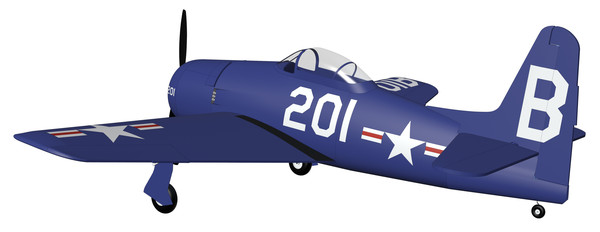 Grumman F8F Bearcat
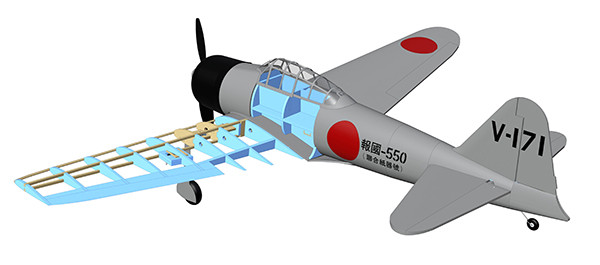 Mitsubishi A6M Zero
 Focke-Wulf Fw 190A
 Cessna 172 Skyhawk
 7ECA Citabria
 Yak-55M
 Piper PA-28 Cherokee
 Lanarius RC glider
 Extra-300
 Piper PA-18 Super Cub
 Sbach 300
 T-28 Trojan
 Messerschmitt Bf-109
 Nakajima Ki-84 Hayate
 Republic P-47N Thunderbolt
 Edge-540
 Cessna 150
 F4U Corsair (Fatty+Normal)
 Grumman F6F Hellcat
 Lavochkin La-7
 Airbus A320
 Curtiss P-36 Hawk

Cartoon Messerschmitt Bf. 109
Cartoon Piper Cub
Lake Clipper Supermarine Spitfire
 Hawker Hurricane
 Curtiss P-40 Warhawk
 North American P-51B Mustang
 2000 mm RC motor glider
 Piper J-3 Cub
 Cessna
 American Champion Decathlon/Citabria
 Extra 330SC
 Flying Wing
 Grumman Goose/Albatross
 MiG-29 Fulcrum
 Slow Flyer
 Hydro Slow Flyer
 RC airboat
 Flying Boat
 Space Shuttle
 PZL-104 Wilga 2000 Draco
 Beechcraft 17R Staggerwing