
Focke-Wulf Fw 190A RC Plane Plans
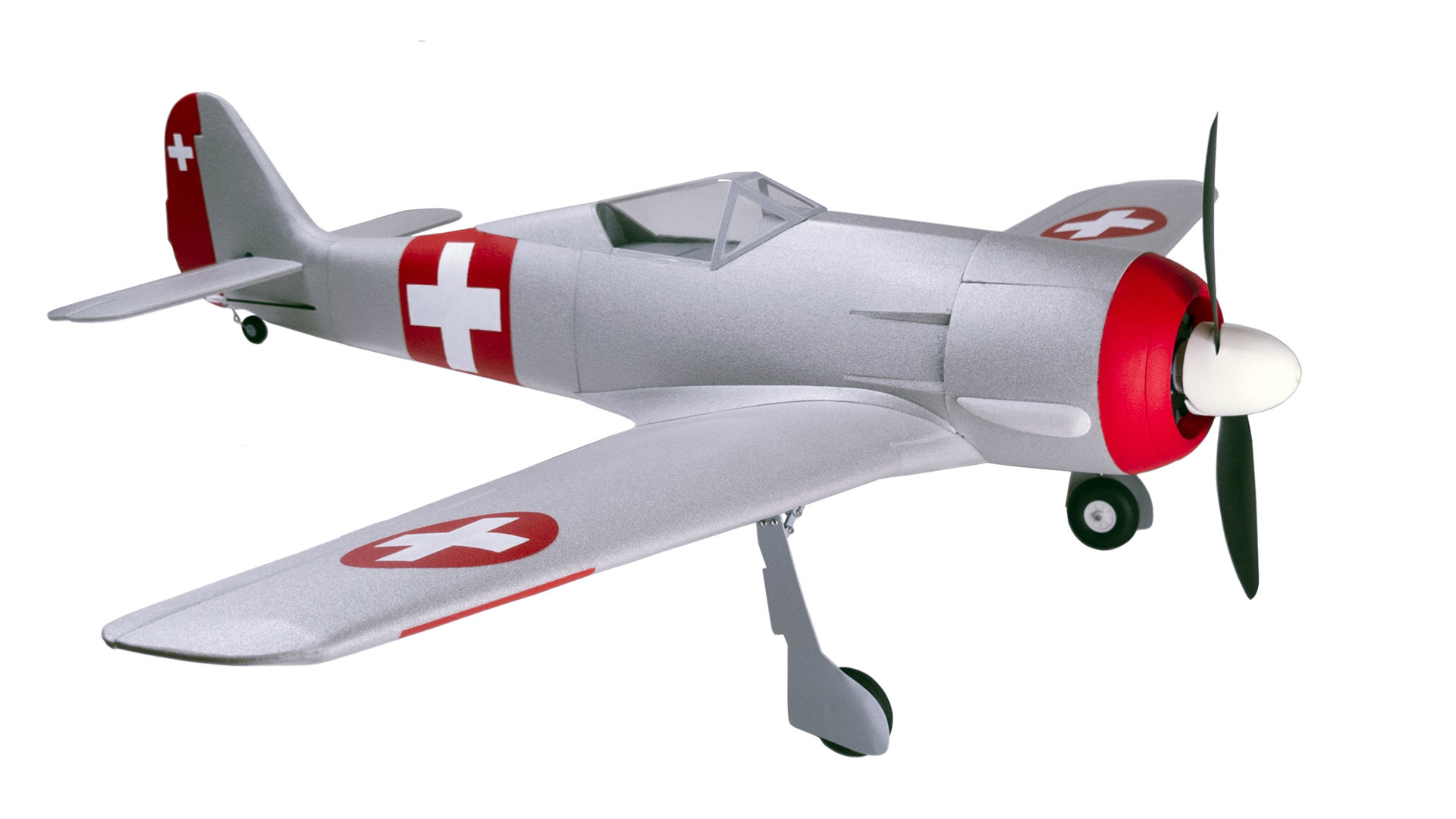
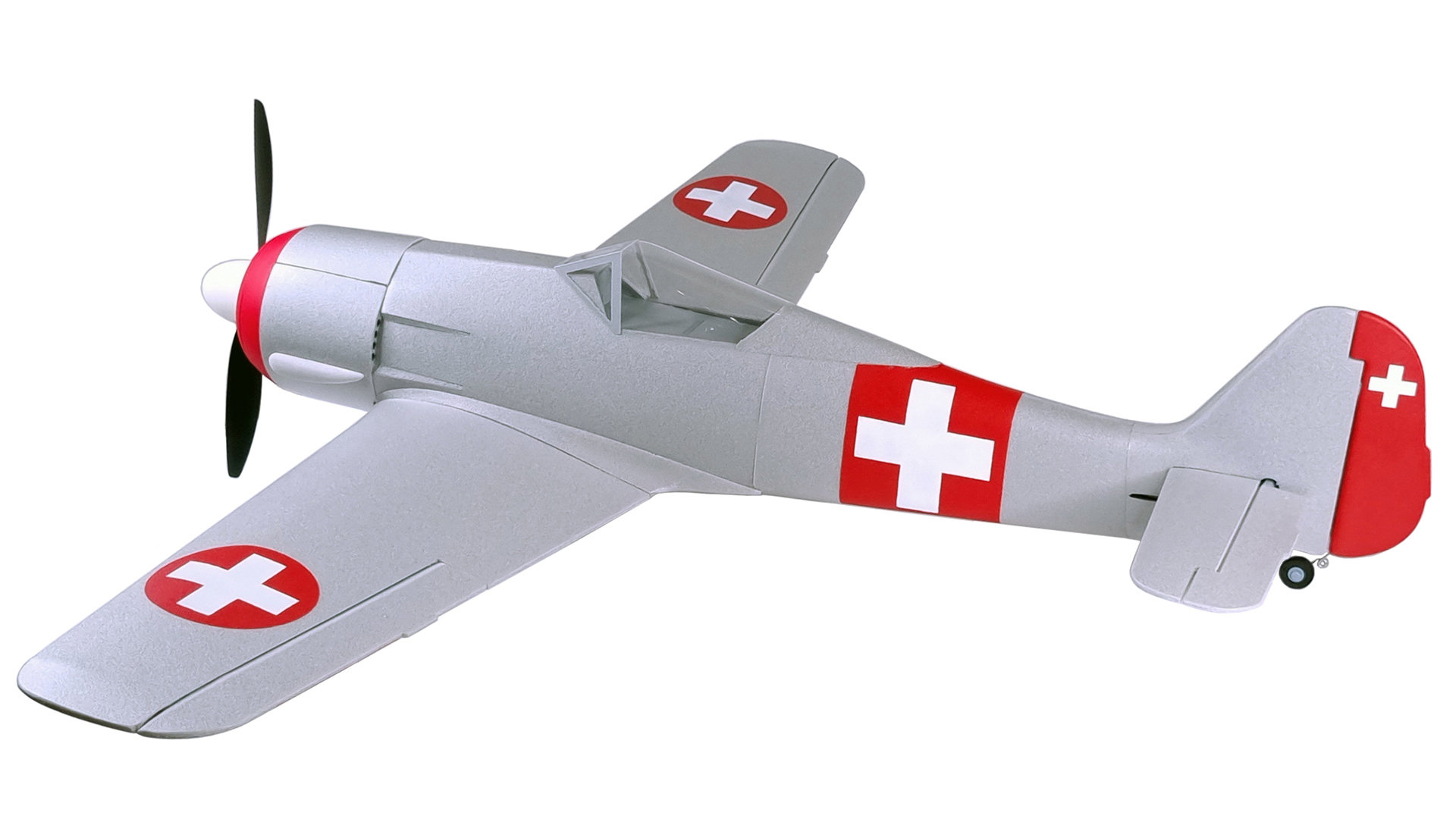
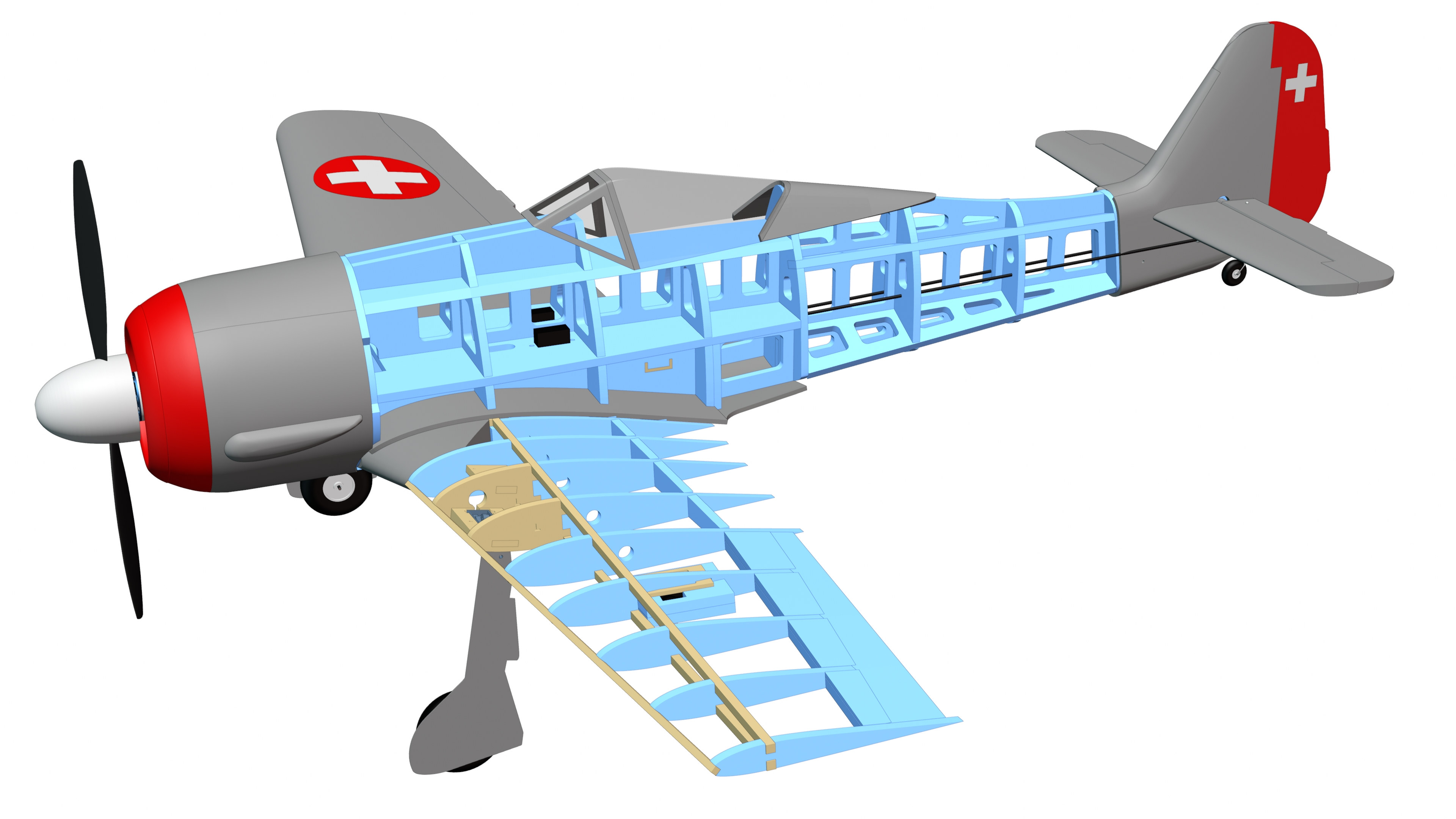
Wingspan: 1000mm (39")
Flying Weight: 375 g (if the foam density is 30kg/m3 )
Wing area: 17,08 dm2
Wing loading: 22 g/dm2
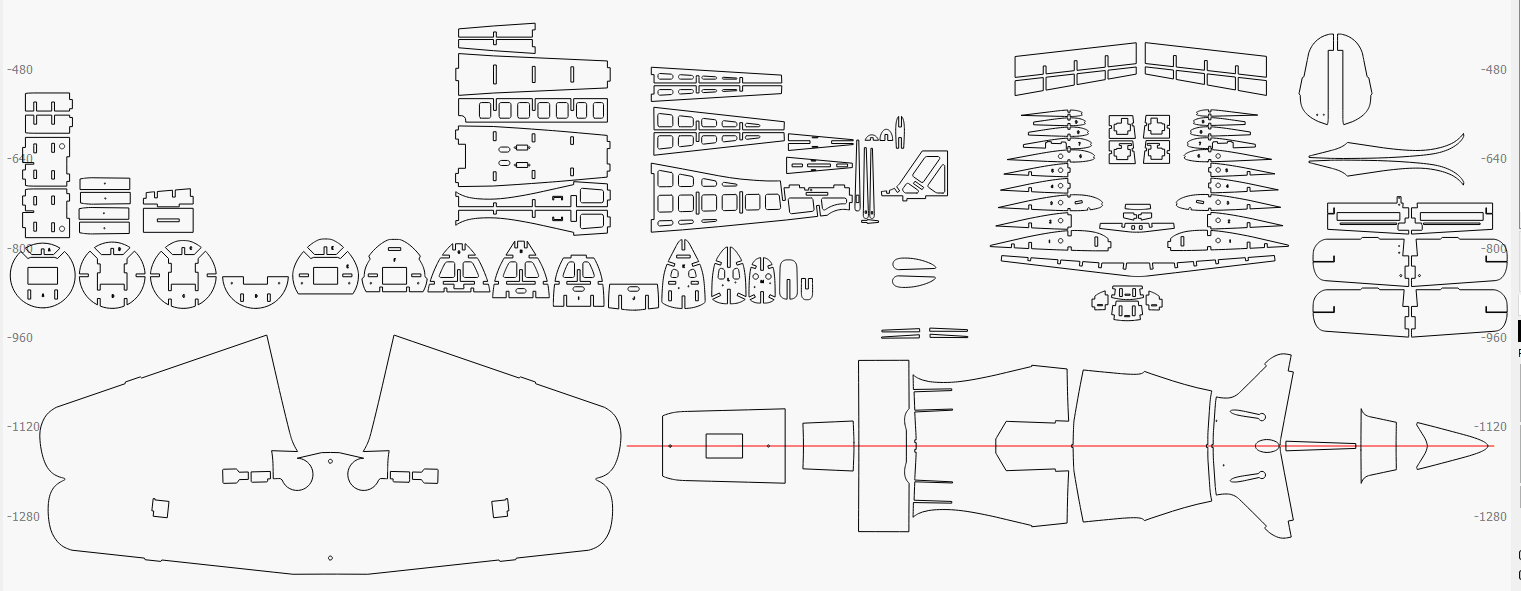
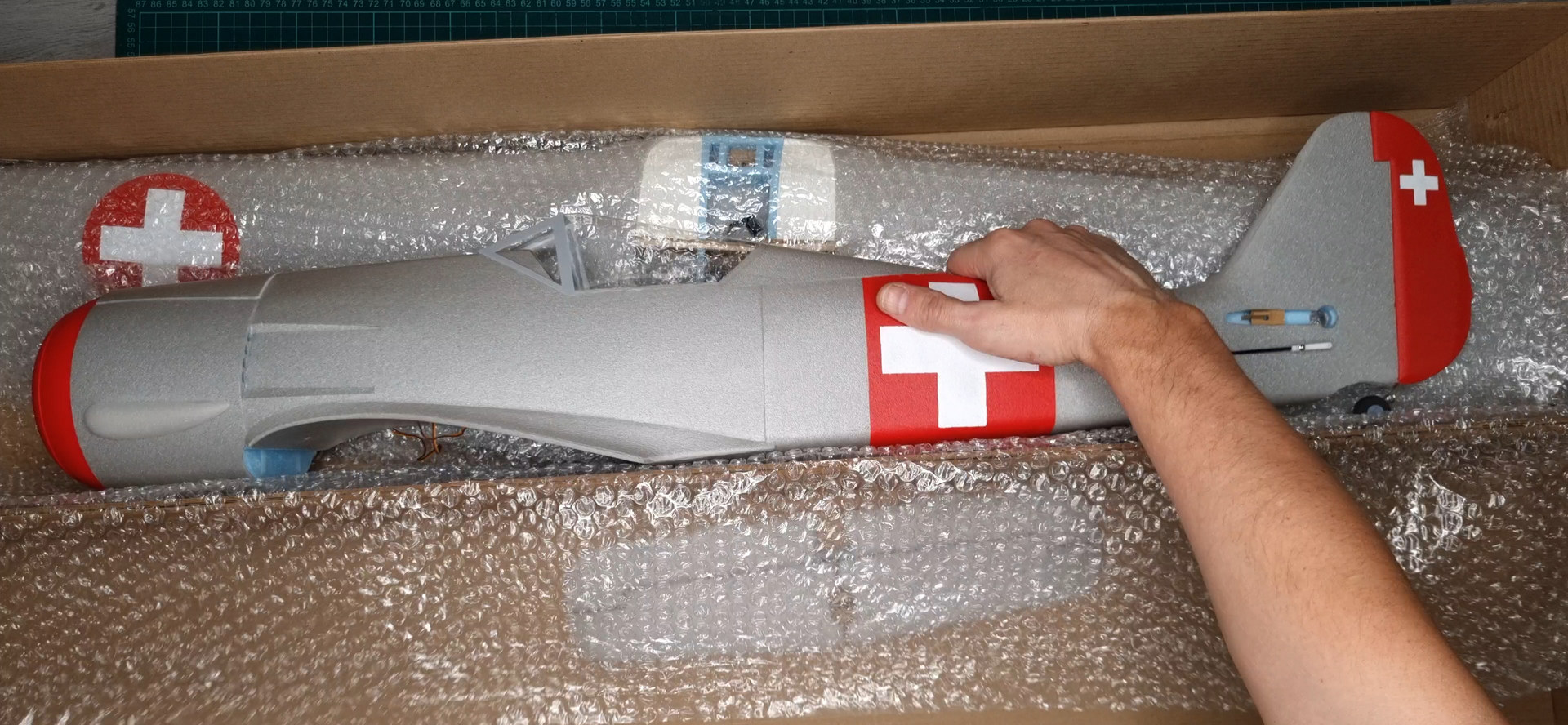
Materials: XPS extruded polystyrene foam (Depron, Styrofoam etc.) 5mm frame and ribs, 3mm - skin, balsa wood 4x4, 3x3mm, PLA-LW for "plywood" parts, UHU Por glue
Motor: SunnySky X2305 KV1450  (25g), Amazon
Propeller: 1047 (8g); 1147;
ESC: SunnySky X 18A (9g),
Servos:EMAX ES9052MD (5,5g) (5,5g x 6)
LiHV battery: 850mAh 2S 7.6V (36g); 650 mAh 2S 7.6V (34g);1100mah 2S 7.6V (46 g)
Stainless Steel Spring Wire 2 mm
Wheels 50mm (2")
Tail wheel 19mm
Neodymium magnets 3x5mm
Horizontal stabilizer carbon tube 500x3x2mm
Carbon control rods: 500x2x1mm
Wing plastic screws M4x40
Nylon screws: 2x4, 2x8 mm
Steel screws: M2.5x8, M2x8, M2x6 mm for 3D printed retracts (video)
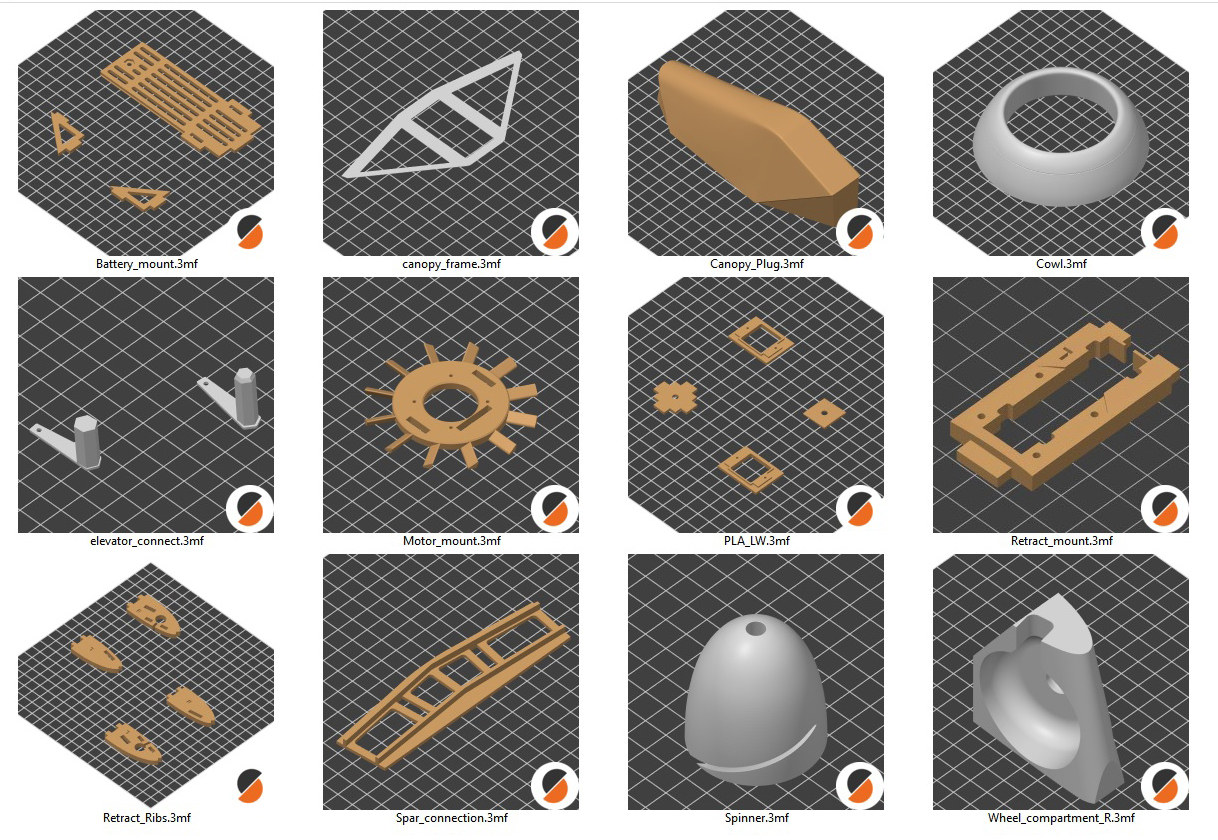
3D printed parts: cowl, spinner, wheel compartments - eSun PLA-LW; retracts, elevator halves connectors, canopy frame - PolyMax PLA; others - Polymaker PLA-LW wood and black color). 3MF files with all settings (Prusa Slicer)
Download PDF, STL, 3MF and DXF files (€8) в pубляx
Download free example
Focke-Wulf Fw.190 «Würger» history
The FOCKE-WULF 190 fighter plane can be safely classified as one of the best fighter planes of the Second World War. It was constructed and developed in a team of designers led by Professor Kurt Tank. From the moment it was introduced into the armament, the Luftwaffe was the strength of the German air force and was one of the most difficult opponents to defeat for the Allied air forces.
The A-3 version is derived directly from the earlier A-2. In the spring of 1942, the serial production of the BMW 801 D-2 engine was launched. The power increased to 1730 HP by increasing the compression ratio in the cylinders and increasing the speed of the compressor. Starting from this version, A-series airframes were widely used in extensive research programs aimed at obtaining the most advantageous variants of armament and equipment. The A-3 version of the aircraft was produced until July 1942.
The escalation of the activities of the Allied bomber in mid-1941 increased the interest of the Luftwaffe in high-altitude fighters. The start of mass bombing of industrial centers and cities in January 1942 forced the search for a new fighter plane. The carpet raids were carried out from a high altitude, inaccessible to German fighters. Experiments with the Fw 190 В and C series aircraft did not give good results.
Only the use of the Jurno 213 engine in the Fw 190 V17, which became the model for the Fw 190 D-0 series, gave a chance to create a mass-produced high-altitude fighter. The Jurno 213 was a V, fuel-injected, auto-regulating engine. Other changes introduced to the new plane were the extension of the rear fuselage section by 50 cm, reinforcement of the tail wheel, installation of the pressurized cabin cover. It is also envisaged to use an airfoil with an enlarged supporting surface. The aircraft modified in this way became a model for the Fw 190 D-0 version, but it was not put into production. Also, the Fw 190 D-1 and D-2 versions were not accepted for serial production. The next version of the aircraft was the Fw 190 D-9. The plane was powered by a Jurno 21 ЗА engine, and had a wing with an area of 18.3 sq m unchanged compared to the Fw 190 A. The armament consisted of two MG 131 located above the engine and two MG 151/20 in the wing root. This version went into series production in August 1944 and on September 7 the first serial plane was tested. The first unit to receive new planes was the lll./JG 54 "Grünherz". The pilots initially approached the new plane with a lot of distrust, but after training on the new plane, they appreciated its advantages. They were mainly used to cover the Me 262 take-off and landing. Another unit that received new aircraft was the ll./JG 26 "Schlageter". This unit was stationed in Handrup in October 1944. Its task was to combat Allied bombers. the Fw 190 D-9 aircraft was a special commanded unit of Captain Waldemar Wübke, intended to protect the JV 44 unit, commanded by Adolf Galland, flying Me 262 aircraft. Another unit equipped with the Fw 190 D-9 was the regiment JG 6 "Horst Wessel" stationed in Żary This regiment performed patrol flights.
The Fw 190 D-9 aircraft was recognized as the best German fighter used in large numbers.
His late introduction into service limited his role in the fighting at the end of World War II.
Tactical and technical data of the Fw190 D-9 aircraft:
span - 10.51 m; length - 10.19 m; height - 3.36 m; take-off weight -4270 kg; engine - Junkers Jurno 213A-1 with a MW50 installation, 1770 hp; maximum speed - 686 km / h; practical ceiling -11,100 m; range - 810 km.
Focke-Wulf Fw 190 plans
Technical data of FW 190 version A-3:
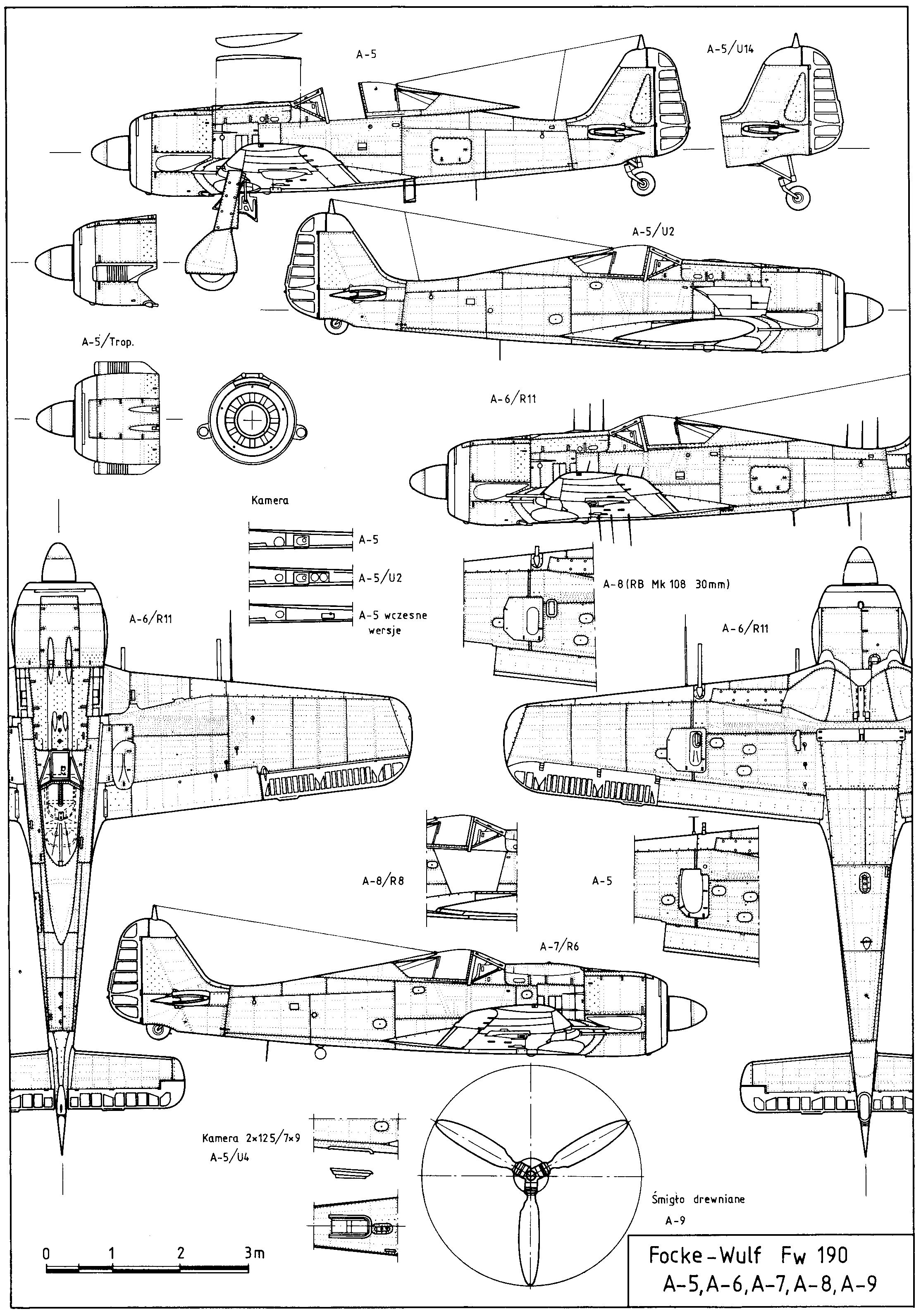
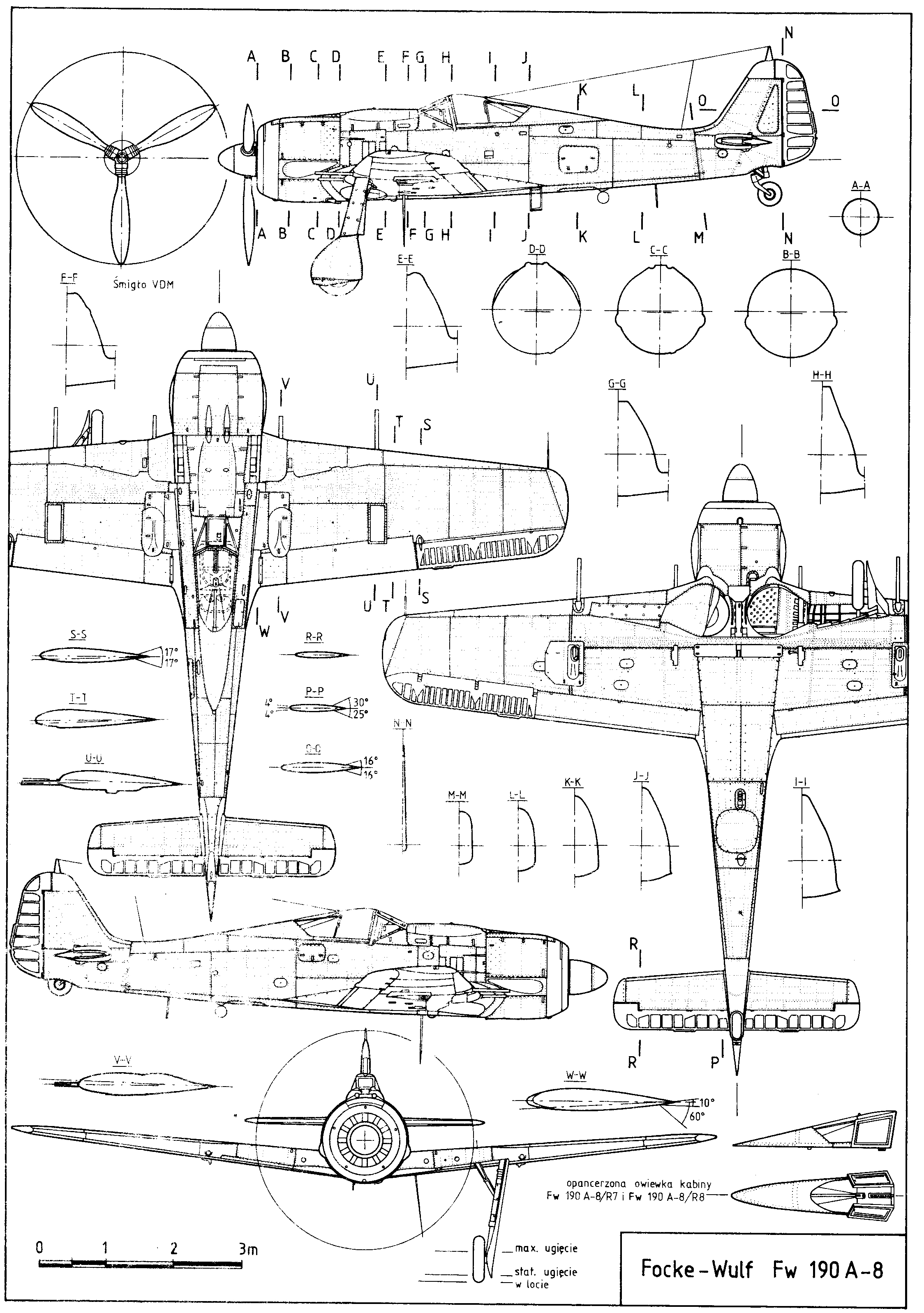
Span 10,506 m
Length 8,950 m
Height 3,950 m
Wing area 18.30 m2
Curb weight 2,845 kg
Maximum take-off weight 3,995 kg
Maximum speed 660 km / h
Ceiling 10,600 m
Range 800 km
Engine - BMW 801 D-2 with a capacity of 1730 hp
Weapon - 4 cannons MG 151 / 20E cal. 20 mm + 2 machine guns Mg 17 cal. 7.9 mm
Focke-Wulf Fw 190 D-9
The escalation of Allied bomber operations in mid-1941 led to a growing interest in high-altitude fighters by the Luftwaffe. The commencement of mass bombing raids on industrial centers and cities in January 1942 forced the search for a new fighter aircraft. Carpet raids were conducted from high altitudes, inaccessible to German fighters. Experiments with the Fw 190 B and C series aircraft yielded poor results. Only the adoption of the Jurno 213 engine in the Fw 190 V17, which became the model for the Fw 190 D-0 series, offered the opportunity to create a mass-produced high-altitude fighter. The Jumo 213 was a V-engine with fuel injection and automatic engine control. Other changes introduced to the new aircraft included extending the rear fuselage section by 50 cm, strengthening the tail wheel, and installing a pressure canopy. A wing with an enlarged lifting area was also planned. This modified aircraft became the model for the Fw 190 D-0 version, but it was not put into production. The Fw 190 D-1 and D-2 versions were also not approved for series production. The next version of the aircraft was the Fw 190 D-9. This aircraft was powered by a Jurno 213A engine and had a wing area of 18.3 square meters, unchanged from the Fw 190 A. Armament consisted of two MG 131s placed above the engine and two MG 151/20s in the wing root. This version entered series production in August 1944, and the first production aircraft flew on September 7th. The first unit to receive the new aircraft was Ill./JG 54 "Grunherz." The pilots initially viewed the new aircraft with considerable distrust, but after undergoing training on the new aircraft, they appreciated its advantages. The Fw 190 D-9s in JG 54 were primarily used to provide cover for takeoffs and landings of Me 262s. The next unit to receive the new aircraft was ll./JG 26 "Schlageter." This unit was stationed at Handrup in October 1944. Its mission was to combat Allied bombers. Another formation equipped with the Fw 190 D-9 was a special unit commanded by Captain Waldemar W. Obke, assigned to protect JV 44, commanded by Adolf Galland, which flew Me 262s. Another unit equipped with the Fw 190 D-9 was JG 6 "Horst Wessel," a regiment stationed at Żary, which conducted patrol missions.
The Fw 190 D-9 was considered the best German fighter used in large numbers. Its late introduction into service limited its role in combat during the final period of World War II.
Tactical and technical specifications of the Fw 190 D-9:
Wingspan -10.51 m; length -10.19 m; height -3.36 m; takeoff weight -4270 kg; engine -Junkers Jurno 213A-1 with MW50 powerplant, 1770 hp; maximum speed -686 km/h; service ceiling -11,100 m; range -810 km.
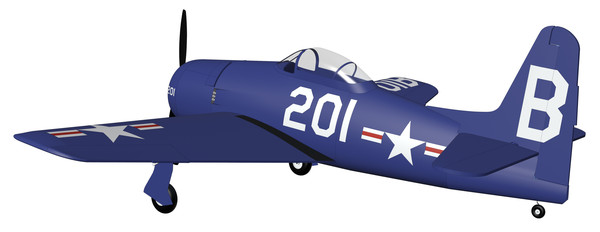 Grumman F8F Bearcat
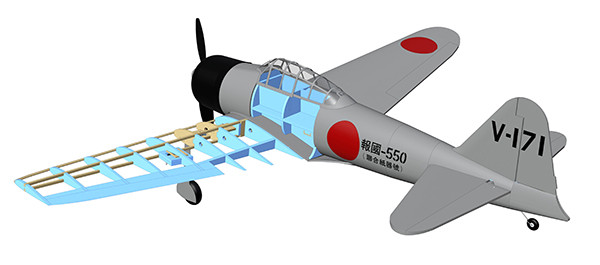 Mitsubishi A6M Zero
 Cessna 172 Skyhawk
 Aeronca 7AC Champion
 7ECA Citabria
 Yak-55M
 Piper PA-28 Cherokee
 Lanarius RC glider
 Extra-300
 Piper PA-18 Super Cub
 Sbach 300
 T-28 Trojan
 Messerschmitt Bf-109
 Nakajima Ki-84 Hayate
 Republic P-47N Thunderbolt
 Edge-540
 Cessna 150
 F4U Corsair (Fatty+Normal)
 Grumman F6F Hellcat
 Lavochkin La-7
 Airbus A320
 Curtiss P-36 Hawk

Cartoon Messerschmitt Bf. 109
Cartoon Piper Cub
Lake Clipper Supermarine Spitfire
 Hawker Hurricane
 Curtiss P-40 Warhawk
 North American P-51B Mustang
 2000 mm RC motor glider
 Piper J-3 Cub
 Cessna
 American Champion Decathlon/Citabria
 Extra 330SC
 Flying Wing
 Grumman Goose/Albatross
 MiG-29 Fulcrum
 Slow Flyer
 Hydro Slow Flyer
 RC airboat
 Flying Boat
 Space Shuttle
 PZL-104 Wilga 2000 Draco
 Beechcraft 17R Staggerwing